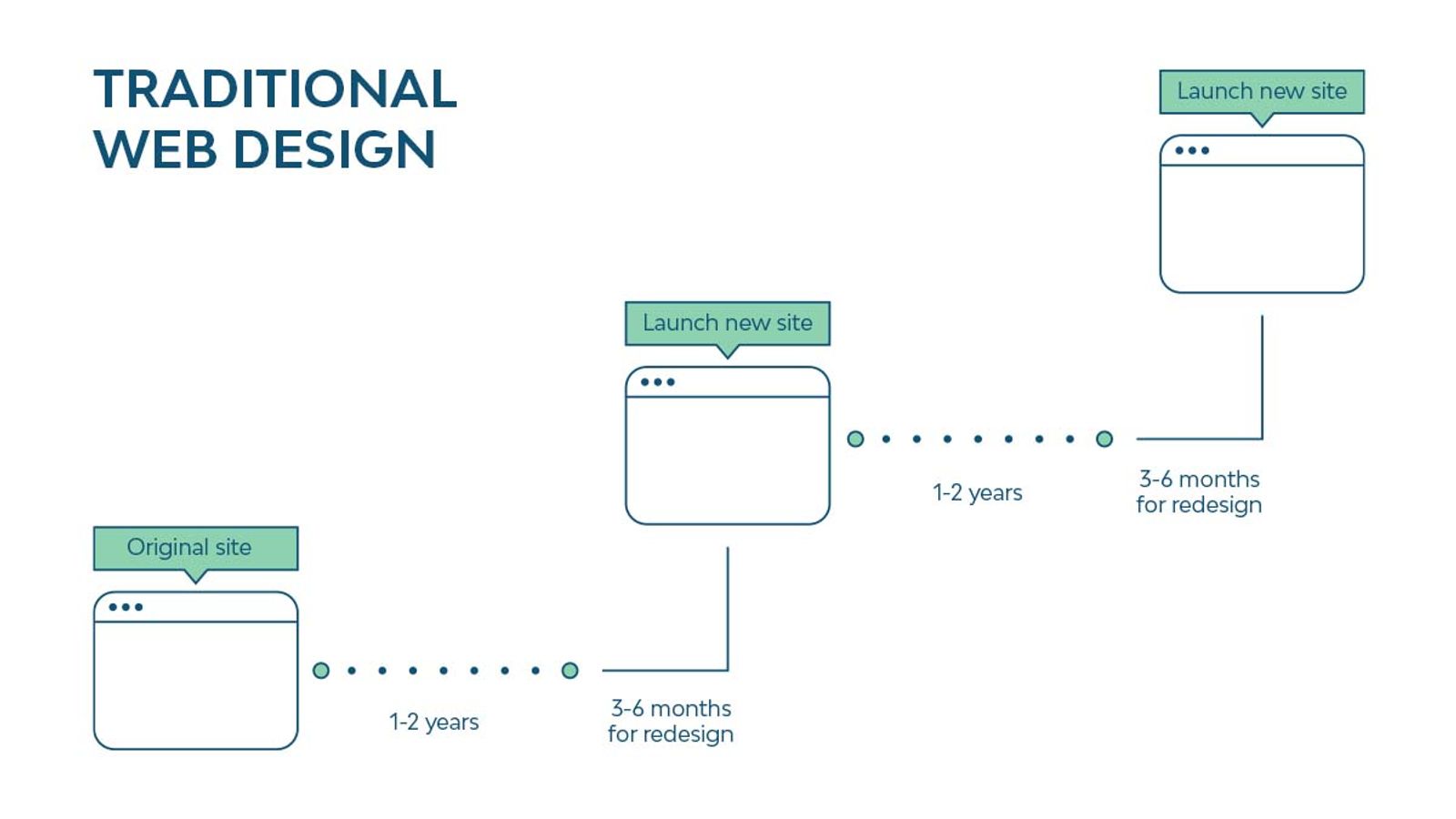
Every two or three years, mid-sized business (MSME) leaders and corporate executives often face an agonizing operational cycle: their company website is no longer able to handle traffic loads or support the latest business features. You want to add a B2B client portal, a multilingual booking system, or advanced analytics, yet your IT team states that the current site has "hit a wall" and must be rebuilt from scratch. The frustration of trying to suppress these overhaul costs often drives companies into the trap of cheap Serang website services that only offer generic template systems. The result? You repeat the same mistake, wasting tens of millions of rupiah on a short-term solution that will be obsolete again by next year. This cycle severely drains capital expenditure (CapEx) and kills the momentum of your marketing campaigns.
You do not have to constantly tear down your digital home just to add one new room. In this era of brutal digital competition, you need a foundation that can adapt, pivot, and grow as fast as your business. ArvelloCreative is here to introduce you to a corporate-level software engineering revolution: Modular Website Architecture. Through this strategic guide, we will dissect how this component-based design approach radically slashes your IT maintenance costs, provides limitless scaling flexibility, and transforms your company website into a long-term asset that is immune to the changing times.
Why Choosing Cheap Serang Website Services Actually Inflates Long-Term Costs?
B2B decision-makers (such as CEOs or CFOs) often view corporate website procurement as an expense item that must be suppressed to the absolute minimum. In the early phases of business expansion, hiring a very low-cost web creation service that uses conventional CMS templates (like legacy monolithic platforms) looks like a genius saving tactic. However, these cheap template systems are essentially a "black box"; the programming codes inside are locked together rigidly, tangled, and cannot be separated from one another.
Let’s use a building construction analogy to understand this problem. Buying a ready-to-use website template is like buying a prefab house where the walls, water pipes, electrical wiring, and foundation are cast into a single unchangeable unit. When your business grows rapidly and you want to add another floor on top, you cannot simply extend the structure. You are forced to destroy the entire house, throw away all the valuable furniture inside, and rebuild everything from empty land. This is the definition of the most brutal financial waste in the world of digital engineering.
In field practice, when your company suddenly needs an ERP inventory system integration, a foreign currency-specific payment gateway, or a corporate client portal (B2B Portal), amateur developers from those cheap agencies will throw up their hands. They will claim that your old template does not support changes of that magnitude. You are then forced to pay for a total overhaul. According to authoritative global technology research reports McKinsey, technical debt caused by rigid software architecture like this sucks up to 40% of a company's total IT budget every year just to patch systems that are actually already obsolete. Money that should be used for client-acquisition ad campaigns is instead exhausted on fixing broken code.
What is Modular Website Architecture? (Jargon-Free Explanation for Executives)
To permanently exit that cycle of inflating IT costs, the enterprise-class software development industry has fully shifted to an approach called Modular Architecture. In simple conceptual terms, modular architecture is a method of designing and developing a website where every function, feature, or interface component block is built as a self-standing, independent module.
You can imagine the logic of modular architecture exactly like the way Lego building blocks work. If you want to change your Lego car into a longer and larger truck, you don't need to melt the plastic and recast the entire vehicle from scratch. You simply take new cargo blocks and connect them to the existing chassis with ease. Furthermore, if one wheel block is damaged, you only need to pull that wheel block out and replace it with a new one, without touching the engine block or the steering block at all. Everything is isolated yet works in a harmonious system.
Within a modular website ecosystem, elements like "Product Catalog," "Consultation Form," "Price Calculator," or "Client Testimonial Blocks" are built as these independent blocks (often referred to as React Components in modern programming languages). When your marketing team wants to completely overhaul the appearance of a lead capture form page to boost A/B testing conversion rates, the developers at ArvelloCreative can execute it in full isolation. They only update that specific form module without disrupting, slowing down, or shutting down the main product catalog module currently being actively accessed by thousands of your VIP potential customers. This modular scheme ensures that business innovation and experimentation can run very nimbly without the risk of operational paralysis.
Baca Juga: Scale-Up Bisnis Maksimal dengan Arsitektur Headless CMS
3 Extreme Financial Advantages of Modular Design for B2B Businesses
The shift from rigid monolithic templates toward modular architecture is not just a tech trend adoption for show; it is a highly rational strategic financial decision for corporations projecting massive scale growth. This approach transforms your digital property from a cost center into a profit center.
Here are three essential financial advantages you will receive:
1. Ultra-Fast Time-to-Market
In the era of e-commerce business competition and B2B services, momentum is the most valuable currency. If your company wants to immediately launch a new sub-service or respond to a competitor's movement with a lightning marketing campaign (landing page), you do not need to wait for a developer to write code from scratch. Your marketing team or developers only need to "reassemble" interface component modules already existing in your system library (such as Call-to-Action button modules, pricing card modules, and video gallery modules) to create a new, fully responsive page. A process that used to take weeks can now be executed perfectly in just a matter of days. You steal the campaign start before your competitors even realize it.
2. Radical Maintenance Efficiency
Fixing security gaps or bugs (code errors) on conventional monolithic websites often takes a very long time. Programmers must trace through millions of overlapping lines of code like a tangled ball of yarn; fixing one line of code on the "About Us" page could accidentally break the payment button on the "Checkout" page. With an advanced modular structure, that problem vanishes. When an error occurs in the contact form integration to the CRM, the developer knows exactly that the issue is isolated only to the "Form Module." This bug isolation dramatically slashes developer billable hours for emergency repairs. This reduction in billable hours will directly lower your company's operational expenditure (OpEx) month after month.
3. Zero-Downtime Deployment
Your B2B corporate clients have zero tolerance for a website that suddenly becomes inaccessible because it is displaying a "Website is under maintenance" message. In corporate-scale transactions, even one hour of downtime can mean losing deals worth hundreds of millions of rupiah. Because these modules are developed independently, new feature updates or security patches can be injected into the website directly in the background (background deployment). There is no requirement to shut down the main server. B2B transactions continue to flow in without interruption, while the system automatically updates itself into a more resilient and advanced version.
Limitless Scalability: Marrying Modularity with Headless CMS
As a software engineering and creative agency oriented toward the highest quality standards of E-E-A-T (Experience, Expertise, Authoritativeness, Trustworthiness), ArvelloCreative never applies modular architecture in half-measures. We realize that for this modularity to reach its peak performance, it must be supported by a server infrastructure capable of separating data traffic loads from visual loads.
This is why we always strategically pair this modular interface component system with a revolutionary Headless CMS architecture. How do these two super technologies complement each other?
Let’s use a modern aviation analogy to dissect it. If a conventional website (template-based) is a large and heavy commercial airplane where the cockpit, cargo hold, and passenger cabin are fused in one hard-to-maneuver metal shell, then Headless Modular architecture is a highly sophisticated and agile military drone fleet formation.
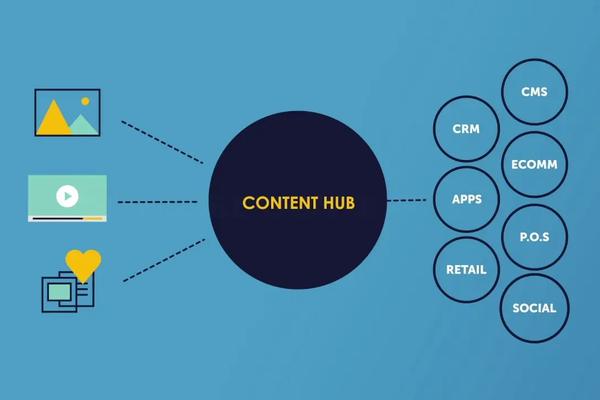
We build the "Head" (the public interface accessed by your prospects) modularly from scratch using extreme-speed frontend frameworks like Next.js. Meanwhile, we store the "Body" (the database system, blog articles, and order management) in a completely separate and isolated cloud server (using enterprise-class CMS platforms like Sanity.io). This "Head" and "Body" communicate ultra-fast through an API (Application Programming Interface) bridge.
This decoupling and advanced modularity result in a technical miracle coveted by all industry leaders: Zero-Latency Rendering. This means, even if next month you add 20 highly complex new feature modules to the website (such as automated distributor portals, interactive logistics estimation calculators, or 4K video integrations), your main database server will never experience an overload. The website pages will still be delivered and presented to your executive clients instantly in milliseconds. This smooth, frictionless performance not only satisfies Google's organic ranking algorithms but also projects the professional authority essential for winning high-level negotiations with your corporate clients.
Conclusion: Invest in a Digital Asset That Grows With Your Company
In the harsh competition of the 2026 business ecosystem, operational technology bottlenecks are the primary inhibitor of your market dominance expansion. Constantly throwing the company budget into tearing down and reassembling monolithic websites that become obsolete every two years is an adverse financial cycle. Companies that successfully dominate their industrial niches are companies that dare to invest in infrastructure capable of adapting, pivoting, and growing dynamically in line with the increasing complexity of their business models.
Modular website architecture is not just a collection of jargon from the IT team; it is your financial seatbelt against all future technology trend uncertainties. By designing digital assets based on highly agile component blocks, you cut all maintenance budget leaks, accelerate marketing campaign innovation time, and consistently provide a perfect interface for every enterprise-level prospect that visits.
Are you ready to stop the cycle of website rebuilds that drain company cash and start building a digital foundation that is scalable for a lifetime? Do not gamble the future valuation and credibility of your business in the hands of vendors who only rely on rigid templates vulnerable to hacking.
Take a visionary strategic decision today by switching to enterprise-level modular architecture engineering. Contact our software engineers and business consultants to secure a professional national-scale Serang website servicepartnership from ArvelloCreative. Schedule your free digital infrastructure audit right now, and let’s design together a stunning, super-fast digital business ecosystem ready to grow boundlessly alongside your company's success!