Mobile-First Design: Why Non-Responsive Websites Hinder Business Growth in 2026
Imagine this operational scenario: Your digital campaign is a huge success, attracting the attention of B2B managers or premium potential clients. However, when they click your site link via their smartphone in the middle of a traffic jam, the website text is too small to read, menu buttons cannot be pressed, and image elements are piled up in a mess. The frustration that arises in those first three seconds is enough to make them close the screen and switch directly to your competitor. Many local business owners and MSMEs are often tempted by the scattered offers of cheap Serang website services, without realizing that the rigid template systems they receive are actually the biggest obstacle to the company's scalability (scale-up). In the era of smartphone dominance in 2026, having a digital storefront that can merely "be opened" on a phone is completely irrelevant. You need digital architecture based on Mobile-First Design. ArvelloCreative is here to completely overhaul how your audience interacts with your brand, ensuring every screen touch is capable of transforming an ordinary visitor into a high-value corporate client.
Quick Summary (Key Takeaways)
- Google's Rules (Mobile-First Indexing): Search engines evaluate and rank based on the mobile version of your website; failure in the mobile interface means you will sink from Google's first page.
- Massive Ad Budget Leakage: Directing paid ad traffic to a non-responsive website is a fatal waste that triggers an explosion in bounce rates.
- Not Just "Shrunken" (Responsive vs. Mobile-First): Mobile-First designs the website from the smallest screen first to prioritize primary functions, not just hiding heavy desktop elements that burden the server.
- Headless Architecture is the Absolute Solution: Replacing conventional templates with modern frameworks (such as Next.js) guarantees instant loading speeds on mobile networks (3G/4G/5G).
Shifting the Paradigm: Why Mobile-First is No Longer Optional in 2026
For years, the web design process always began with designing the computer monitor (desktop) version, then the designer would try to "compress" or "adjust" the layout to fit when viewed on a mobile screen. This outdated approach is known as Graceful Degradation. Unfortunately, in 2026, that approach is completely flawed structurally and operationally.
Data proves that the shift in consumer behavior is unstoppable. Based on internet traffic analytical data from authoritative sources, [Insert link to global mobile traffic statistics from Statista here], more than 60% of global website traffic is consistently contributed by mobile devices. In the Business-to-Business (B2B) scope, where executives were previously assumed to only browse at their office desks, the trend now shows that initial vendor research, catalog downloads, and early negotiations are conducted via smartphone screens during their mobility.
The technical analogy is very simple. Having a website that is only optimized for desktop in this era is like having a luxury boutique store where the door can only be opened halfway. Passing visitors might be able to peek inside, but they have difficulty entering, cannot move freely, and eventually choose to shop at the store next door with its doors wide open. If your digital storefront complicates the first step for potential clients, they will never reach the transaction stage.
3 Fatal Impacts of Non-Responsive Websites on Your Business Metrics
Many business executives or Chief Financial Officers (CFOs) still consider website interface updates (UI/UX) as a mere cosmetic expense. This mindset is very dangerous. Failure to present a seamless mobile experience has a domino effect that will literally destroy your financial balance sheet.
First, the Bounce Rate Explosion. Mobile users have much thinner patience compared to desktop users. If your website forces them to manually zoom in just to read your offer paragraph, they will immediately hit the back button. This wasted traffic explains why ads always fail; the importance of a mobile-optimized landing page is the only antidote to save your Return on Ad Spend (ROAS).
Second, Brand Trust Erosion. In the B2B ecosystem, credibility is the highest currency. Google uses E-E-A-T (Experience, Expertise, Authoritativeness, Trustworthiness) guidelines to assess a business. When a website page is messy, buttons overlap, and it loads for more than 5 seconds, your company's Trustworthiness element is instantly destroyed. Corporate clients will automatically conclude that if your company cannot manage its own digital assets, the quality of the industrial products or services you offer must be equally poor.
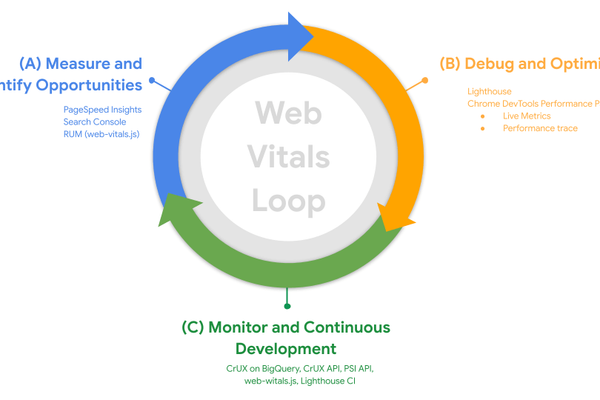
Third, Extreme Penalties from Search Engines (SEO De-indexing). For several years, Google's algorithm has implemented Mobile-First Indexing. This means Google bots completely ignore your desktop version when performing ranking assessments. Google only crawls and evaluates the mobile version of your website. If your mobile version is rigid, has hidden content (hidden text), or fails the Core Web Vitals test, your site will be punished with a lower rank. You will lose all the organic traffic that has been your free lead machine.
Smart Solution: Avoiding the Trap of Cheap Serang Website Services That Ignore Quality
Many MSME owners in Banten's industrial areas eventually choose a shortcut. They hire cheap Serang website servicesthat promise a "Responsive" website in three days. What they don't know is that these amateur developers only use cheap templates designed for desktop, then use the CSS code display: none to hide heavy images or elements so they are not visible on a mobile screen. Visually it might look neat, but behind the scenes, your customer's smartphone browser is still forced to download those 5MB image files that are actually hidden. This is what causes customers' phones to get hot and the website to become very heavy.
Baca Juga: Dampak Kecepatan Loading Website & Omset Bisnis: Metrik yang Sering Diabaikan
Advantages of Modern Architecture: Beyond Conventional Template Limitations
To solve these mobile performance issues, the required approach is not just a visual design fix, but a software engineering architectural overhaul. True Mobile-First Design means designing, programming, and optimizing functions from the smallest screen first (Progressive Advancement), then adding additional elements as the device screen increases (tablet or desktop).
Let’s use a very easy-to-understand technical analogy. Relying on conventional website templates for mobile transactions is like experiencing a very long cashier queue in a supermarket, but the cashier is actually fast asleep at their desk. Transactions are completely stalled because the existing system is too heavy and slow to respond to requests. Old monolithic systems force the server to assemble the page from scratch for every mobile user who arrives.
At ArvelloCreative, we break this transaction deadlock with a Headless CMS architecture approach married to extreme-performance frontend frameworks like Next.js or Astro.
Why is this cutting-edge technology combination so extraordinary for mobile devices?
Designing High-Converting B2B Mobile Experiences
Speed is the foundation, but the user interface layout (UI/UX) is the wall that captures conversions. Designing a Mobile-First layout for a B2B audience demands a very precise level of consumer psychology understanding. Designers cannot simply cram all desktop elements into a 6-inch screen.
Here are three pillars of Mobile-First design applied by enterprise-class agencies:
- Thumb Zone-Based Navigation: How humans hold their phones significantly determines their digital interaction. Ergonomic studies show that 75% of smartphone screen interactions are performed purely using one thumb. Therefore, placing important navigation menus or "Contact Us" buttons in the top left corner of the screen is a fatal design error (that area is hard to reach). We re-engineer the layout by placing the primary Call-to-Action (CTA) buttons at the bottom of the screen in a floating bar (sticky bottom bar). Whenever your client feels convinced by your promotional text, the conversion button is always right under their thumb.
- B2B Form Simplification (Progressive Profiling): In large-scale service industries, sales teams often demand the website to collect a lot of prospect data (Company Name, Position, Budget, Employee Scale). If you force long forms that take up a full screen on a smartphone, your potential clients will feel intimidated and cancel. Our Mobile-First solution is to use a Multi-Step Form approach. We break down complex questions into an interactive full-screen quiz interface. One screen, one easy question. This lowers the user's cognitive load and miraculously multiplies the number of incoming leads.
- Content Pruning Focused on BLUF (Bottom Line Up Front): Mobile visitors are in a hurry. They will not read your four-paragraph company prologue. Text must be designed to be scanned quickly. Our B2B Copywriter will ensure your primary Value Proposition is conveyed in the first two seconds of the page loading (Above the Fold). We use bold bullet points, collapsible text accordions, and hide graphic ornaments that only waste vertical screen space. Simplicity is a form of true digital luxury.
Conclusion: Don't Let Small Screens Kill Your Large-Scale Potential
2026 is the point where market tolerance for technological functionality has reached its highest standard. Businesses no longer compete only on the quality of physical products, but also on how seamless a digital experience they offer to clients. A B2B website that is not designed from the ground up for mobile devices is an operational time bomb that constantly burns marketing budgets and drives away corporate decision-makers in the first seconds of interaction.
Investing in a Mobile-First design supported by modern Headless infrastructure is not a luxury; it is a seatbelt for the financial future and valuation of your company. It is about ensuring that your business doors are always wide open, welcoming every visitor with a digital red carpet, regardless of the device they use when finding you.
Are you ready to end the suffering of high bounce rates, maximize the Return on Investment (ROI) of your digital marketing campaigns, and monopolize the flow of high-quality corporate leads? Don't gamble your company's fate on vendors who still use conventional approaches.
Take control of your business's exponential growth today. Trust the transformation of your digital ecosystem to enterprise-standard technology architects. Immediately contact our B2B strategy consultants and software engineers to secure exclusive Serang website services from ArvelloCreative. Schedule a free audit of your mobile website's performance now, and let's redesign a sophisticated conversion engine ready to multiply your business revenue in the palm of your client's hand!