International Market Expansion: The Importance of an SEO-Indexed Multilingual Company Profile Website
As a visionary entrepreneur, you may feel that the local market has reached saturation and it is now time to look toward the global stage. However, when you attempt to expand internationally, a harsh reality often appears: potential foreign clients or investors visit your website but leave within seconds. Why does this happen? The main obstacle is often the language barrier. Forcing a local language or relying on only one foreign language frequently undermines your brand credibility in the eyes of multinational corporations.
In this critical situation, relying on a simple instant website builder is not enough. Many companies searching for partners offering website development services in Serang or other national agencies eventually realize that global expansion requires a high-level digital architecture. As a leading expert in company profile website development services, ArvelloCreative provides strategic solutions. We understand that having a multilingual company profile optimized for SEO is no longer just an optional feature, but a primary weapon for winning international B2B contracts worth billions of rupiah.
Why English Alone Is No Longer Enough to Dominate the Global Market
Many corporate managers are trapped in the classic myth that “English is the universal language of business, so one language is enough.” This assumption can be extremely dangerous for your market expansion strategy. While English is widely used in B2B correspondence, consumer behavior and decision-making patterns in the digital world reveal a very different reality.
According to global market research from the independent organization CSA Research, there is a striking phenomenon known as “Can’t Read, Won’t Buy.” More than 75% of B2B buyers and global consumers prefer to purchase products or establish partnerships with services presented in their native language. In fact, more than half of respondents say they are willing to pay more if vendors provide comprehensive information in their local language.
For investors from Japan, manufacturing clients from Germany, or potential distributors from the Middle East, reading technical specifications and partnership proposals in their native language creates a sense of security and emotional comfort. A website that relies solely on English will always feel distant. By presenting a multilingual interface, you implicitly send a powerful message: “We respect your culture and we are ready to do serious business in your country.”
The Fatal Impact of Ignoring Language Localization on B2B Client Trust
In the Business-to-Business (B2B) world, transactions are often extremely valuable and involve long-term contracts. In such conditions, trust is the most valuable currency. Ignoring language localization on your website can trigger a chain of negative effects that will gradually destroy your business’s scaling potential.
1. A Dramatic Increase in Bounce Rate
Bounce rate refers to the percentage of visitors who leave your website after viewing only one page. When foreign executives open your website and encounter a language they cannot understand—or messy machine translations—they will immediately press the back button. Google records this behavior as a negative signal, which ultimately damages your overall SEO reputation. This is closely related to the impact of website loading speed on business revenue; if the site is already slow and the language is unclear, visitors will never return.
2. Misinterpretation of Technical Product Specifications
Corporate clients are not simply reading product descriptions—they analyze technical parameters, safety standards, and compliance regulations. Literal translations using automatic plugins often distort technical industry terms. A single word mistake in a technical document on your website can lead to lost investor trust or even legal risk.
3. Loss of Authority and Professionalism
World-class companies maintain flawless presentation standards. If your company wants to compete on the global stage, your digital storefront must reflect that level of professionalism. A poorly localized website gives the impression that your company is merely a “local player” that is not ready to handle international orders at scale.
Read Also:
5 Components of a Company Profile Page for B2B Clients & Investors
Critical Elements in International-Scale Company Profile Website Development
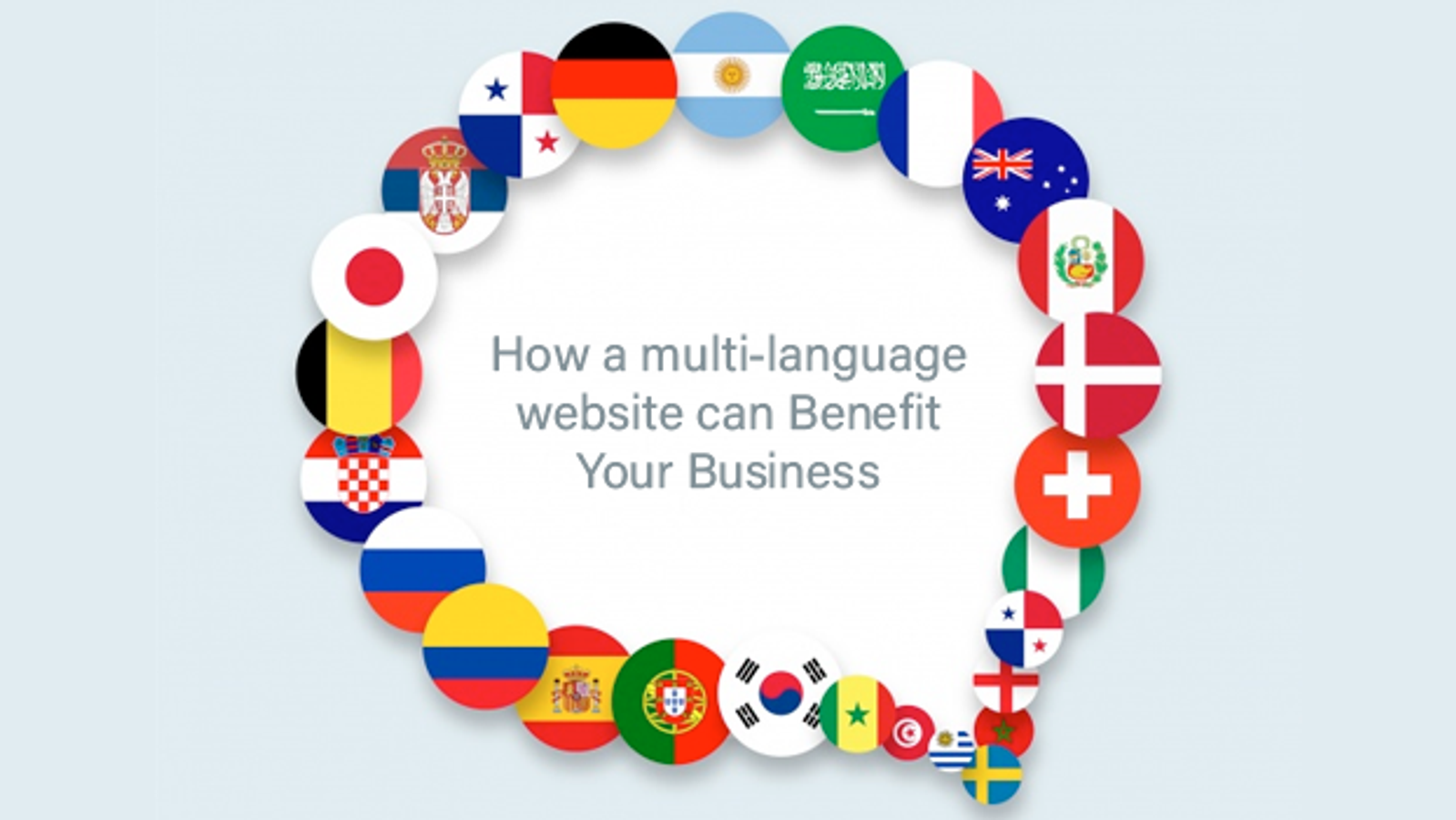
Developing a multilingual website is far more complex than simply adding a country flag button at the top corner of the screen. It is a software engineering and search engine optimization project that requires extensive expertise. That is why choosing company profile website development services with enterprise-level technical capabilities is essential.
Below are several technical elements that must be implemented to ensure your multilingual website functions perfectly.
1. Precise Hreflang Tag Implementation
This is the most crucial foundation in international SEO. Hreflang is an HTML code snippet that informs Google’s algorithm about the language and geographic targeting of a specific page.
Without proper hreflang tags, Google may interpret your English page and your Indonesian page as duplicate content. Even worse, users in Spain might be directed to your French page instead. Experienced developers will ensure this code is correctly implemented so search engines always display the correct language version to the correct audience in the correct country.
2. SEO-Friendly URL Structure for Global Scale
How you structure URLs for multilingual content significantly influences your SEO success in international markets. According to the official guidelines from Google Search Central on multi-regional sites, there are three recognized methods:
Top-Level Domain (ccTLD)
Examples include yourcompany.jp for Japan or yourcompany.de for Germany. This provides the strongest local signal but is the most expensive and difficult to manage because multiple domains must be maintained.
Subdomain
Examples include jp.yourcompany.com. This method works fairly well, but SEO authority may be split between the main domain and the subdomain.
Subdirectory (Subfolders)
Examples include yourcompany.com/jp/ or yourcompany.com/en/. This is the most recommended method and one we frequently implement. It consolidates SEO authority into a single strong domain while remaining easy to maintain and expand.
3. Separate Database Architecture for Scalability
Poorly built multilingual websites often mix multiple languages within the same database structure, making content management extremely complicated. Professional agencies build strong content modeling architectures where each language has its own structured channel. This allows your marketing team to update content specifically for the European market without affecting the website’s appearance for the Asian market.
Avoiding the Trap of Automatic Translation Plugins
One of the biggest mistakes many SMEs make when trying to go global is installing JavaScript-based automatic translation widgets or plugins (such as the Google Translate widget) on their websites. On the surface, this appears to be a quick and inexpensive solution. However, from both a technical and B2B business perspective, it is a disaster.
Why automatic translation damages your business:
Not Indexed by Search Engines
Content translated directly on the screen (client-side) through third-party widgets cannot be crawled or indexed by Google bots. This means that even if your website visually appears in Japanese, it will never rank in Google Japan search results. A true multilingual website must use server-side rendering, where translated text is physically delivered from the server before reaching search engines.
Robotic and Unnatural Translations
Machines do not understand cultural context, idioms, or industry-specific jargon. Awkward translations make your company appear amateur and unreliable in front of multinational executives.
At ArvelloCreative, we implement the approach explained in the secret of high-performance websites built with Next.js, which supports native internationalized routing. This ensures every language version is rendered extremely quickly from the server, indexed independently by Google, and free from page loading delays.
Transcreation vs Translation: Turning Global Visitors Into Transactions
When targeting audiences across different continents, simple word-for-word translation is not enough. You need Transcreation (Translation + Creation), which means adapting marketing messages from one language into another while preserving the intent, tone, style, and emotional context of your brand.
In the B2B world, copywriting strategies that work in Jakarta may not work in Berlin or Tokyo. Business culture strongly influences how messages are received.
East Asian Markets (such as Japan and Korea)
These audiences tend to prefer information-dense company profile pages filled with official certifications, detailed data charts, and clearly structured corporate hierarchies to establish trustworthiness.
Western Markets (such as the United States)
These markets prefer minimalist design, straightforward copywriting, and strong emphasis on measurable outcomes such as Return on Investment.
Therefore, your UI/UX layout must also adapt. For example, expansion into the Middle Eastern market requires automatic Right-to-Left (RTL) layout support. Expanding into Germany requires flexible UI design because German vocabulary is typically about 30% longer than English words. Only experienced developers can properly implement this level of design flexibility.
Choosing Website Development Services in Serang or National Agencies That Understand Multilingual Architecture
Entrusting your international expansion to the wrong vendor will waste both time and operational budget. Whether you are searching for website development services in Serang or a national-scale digital agency for a large project, you must ensure they have proven experience with complex systems.
Here are several criteria you should demand from your web agency:
Mastery of Headless CMS
Ensure the agency does not rely solely on rigid conventional CMS templates. A Headless CMS such as Sanity.io enables your team to manage hundreds of multilingual pages efficiently from a centralized dashboard.
Deep Understanding of Technical SEO
Ask them to explain their strategy for implementing multilingual canonical tags and international sitemap.xmlarchitecture. If they appear confused, it is a major red flag.
Cross-Country Speed Optimization
Your website must load equally fast for users in Jakarta, New York, and London. Professional agencies implement a global Content Delivery Network (CDN) to distribute website assets to the nearest servers worldwide.
ArvelloCreative fulfills all of these strict requirements. We combine enterprise-level software development expertise with persuasive digital marketing strategies to ensure your website functions as a powerful digital ambassador for your business, operating continuously 24 hours a day across multiple time zones.
Conclusion: It Is Time to Go Global Without Language Barriers
Bringing your SME or B2B company to the international stage is not just about having a great product. It is about communicating the excellence of that product in languages and cultural contexts understood by your global clients.
Building a strong multilingual digital property is one of the most profitable investments you can make to secure your company’s future valuation. Do not allow language barriers or outdated technical infrastructure to limit your revenue potential or allow competitors to dominate international markets that should belong to you.
Are you ready to dominate Google search results in multiple countries and convert global traffic into real transactions?
It is time to build a scientifically designed, elegant, and fully SEO-optimized multilingual company profile. Contact the ArvelloCreative expert team today to schedule your free consultation session. Let us redesign your international digital strategy and achieve exponential business growth together with a reliable digital partner.